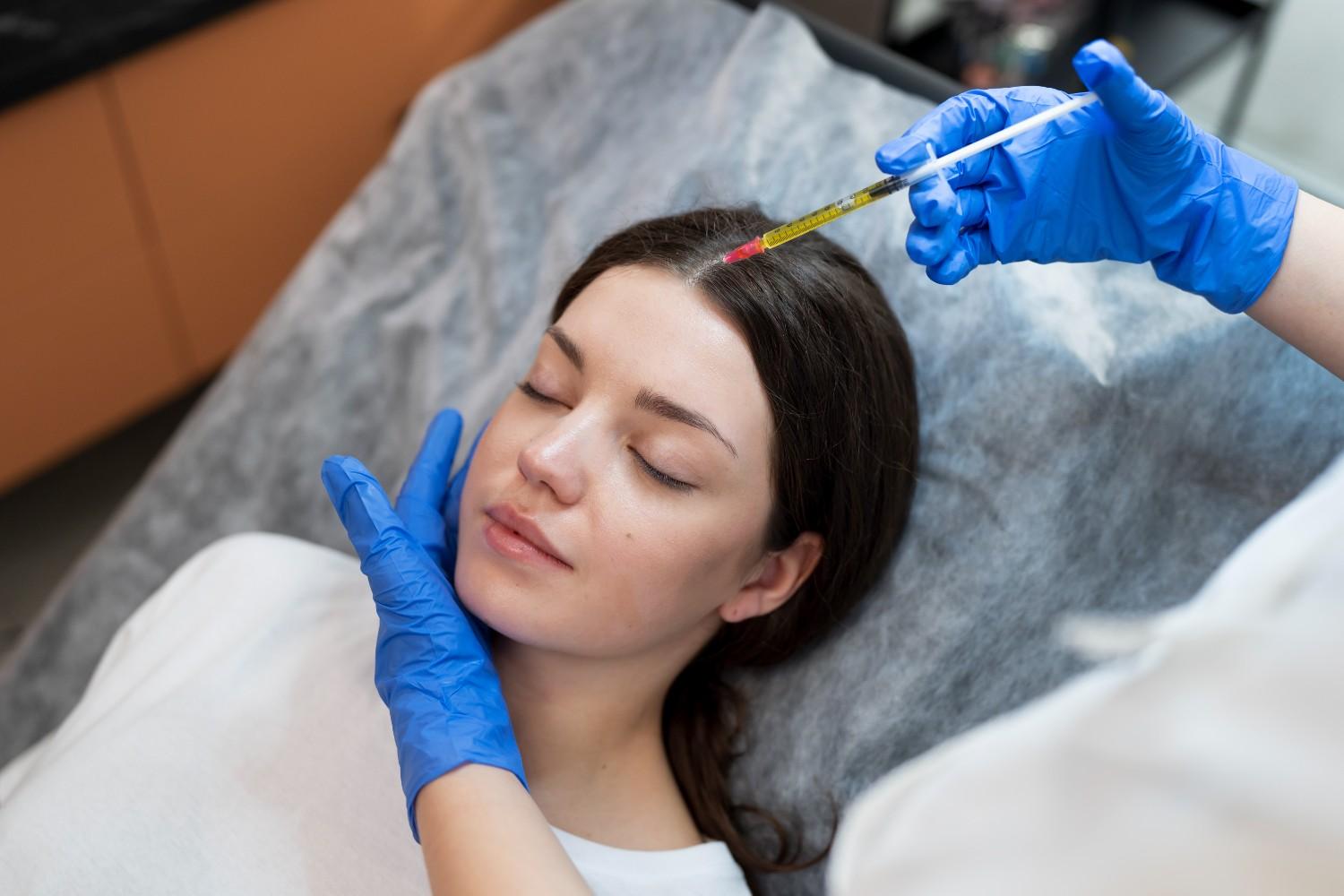
Hair PRP Treatment

Rediscover your confidence with Hair PRP (Platelet-Rich Plasma) Therapy — a natural, non-surgical treatment for hair thinning and hair loss. This innovative procedure uses your own blood-derived platelets and growth factors to support the health of hair follicles and encourage stronger, healthier hair growth.

At Romeo Aesthetic Clinic, we combine advanced PRP techniques with expert care to provide a treatment plan tailored to your individual hair concerns. Hair PRP may help improve the appearance of hair density, strengthen existing hair, and support a healthier scalp without surgery.

Comfort and Convenience

At Romeo Aesthetic Clinic, your comfort is our priority. We provide a relaxing environment, professional care, advanced techniques, and flexible scheduling to make your treatment experience as comfortable as possible.

  • Experienced Doctor
  • Comprehensive Services
  • Personalized Care
  • Latest Technology

Frequently Asked Questions

Hair PRP (Platelet-Rich Plasma) Therapy is a non-surgical treatment that uses a concentrated portion of your own blood containing platelets and growth factors. It is injected into the scalp to support hair follicle health and encourage stronger, healthier-looking hair.

PRP contains naturally occurring growth factors that may support tissue repair and the environment around hair follicles. When injected into the scalp, PRP is intended to support follicle activity and improve the appearance of hair thickness and density over time.

PRP uses material derived from your own blood, which reduces the risk of reactions to donor material. As with any injectable procedure, temporary redness, swelling, tenderness, or bruising may occur. Treatment should be performed by a qualified professional following appropriate sterile procedures.

The number of sessions depends on your hair condition, treatment goals, and individual response. Your doctor can recommend a personalized treatment schedule after assessing your scalp and hair loss pattern.

Some patients may experience mild discomfort or brief stinging during the injections. A topical numbing treatment may be used when appropriate to make the procedure more comfortable.

WhatsApp